
How to Make the Transition Easier for Your Dog or Cat
For many older adults, a pet isn’t simply a pet.
They are companionship, routine, comfort and part of the family.
So, when you’re moving home, it’s important to remember that your dog or cat is experiencing a change too.
They don’t understand why the furniture is disappearing, why there are boxes everywhere or why their familiar surroundings suddenly look different.
Fortunately, there are simple things you can do to make the transition easier.
Before the move
Try to keep your pet’s routine as normal as possible.
Continue with their usual meals, walks and sleeping arrangements where you can. Keeping familiar routines can help reduce the disruption caused by everything happening around them.
It’s also a good idea to keep their favourite things together – their bed, blanket, toys, food bowls and other familiar items.
Don’t wash everything immediately before the move. Their familiar smells can help them feel more comfortable in the new environment.
Keep your pet away from the moving activity
Moving day can be noisy and confusing.
There are people coming and going, doors opening, furniture being carried and unfamiliar sounds throughout the house.
For some pets, this can be frightening – and an open door can create an opportunity for an anxious dog or cat to escape.
If possible, arrange for your pet to stay with a trusted family member, friend or pet sitter for the busiest part of the move.
If that isn’t possible, give them a quiet, secure room away from the main activity.
Put their bed, water, food and a few familiar toys there.
A note on the door saying “Please keep this door closed – pet inside” can also help prevent accidents.
Take familiar things to the new home
When you arrive at your new home, don’t immediately replace everything with new items.
Your pet doesn’t know that the new expensive bed is meant to be an improvement!
Their old bed, blanket and toys carry familiar smells and can make the new surroundings feel less strange.
Set up a small familiar area for them as soon as possible.
Give them time to explore
Let your pet investigate the new home gradually.
Some animals will immediately explore every room.
Others may hide, seem unsettled or stay close to you.
Try not to force them.
Let them take their time.
Your calm presence and familiar voice can provide reassurance while they get used to the new surroundings.
Keep their routine
Once you’re in your new home, try to return to familiar routines as quickly as possible.
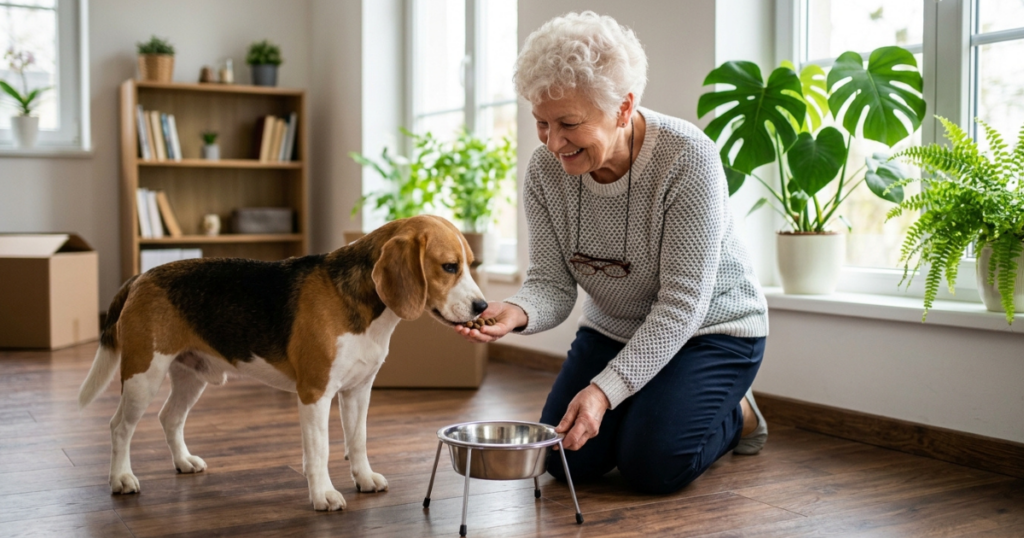
Feed them at their usual times.
Take them for walks at their normal times.
Give them their usual attention.
For an older person moving home, maintaining routines can also be helpful – so this can be a positive opportunity for both you and your pet to settle into your new surroundings together.
Check the new home for hazards
Before allowing your pet complete freedom, have a look around.
Check gates and fencing if you have a garden.
Make sure windows and doors are secure.
Look for gaps underneath gates or fencing.
Check balconies carefully if you’re moving into an apartment.
And make sure household cleaning products, medications and other potentially harmful items are safely stored.
Remember that settling in takes time
Your pet may behave differently for a while. They may sleep more, follow you around, hide or seem unsettled.
Give them patience and reassurance.
A move is a big change, but familiar routines, familiar belongings and your presence can help make the new house feel like home.
And perhaps the best part?
Once you’ve both settled in, you can begin enjoying your new chapter together.
A final thought
When planning a move, it’s easy to focus on furniture, boxes and logistics.
But sometimes it’s the smallest members of the family who need the most consideration.
A little planning can make a big difference to a much-loved pet and to the person who loves them.
At Senior Movers, we understand that moving isn’t only about possessions. It’s about people, routines, memories and the things that make a house feel like home.